Why do we keep eating when we’re not really hungry?
The 3DME Research Survey looks at three key drivers of eating: your body, your cravings, and your self-control.
For adults (18+) living with overweight or obesity – including people using modern weight-loss medications (e.g. Wegovy®, Zepbound®, etc.).
Free • Anonymous • About 15 minutes
Why we’re inviting you
Why we’d love your help
With 3DME we’re trying to better understand how three “engines” of motivation to eat work together in real life – especially in people being treated for obesity:
- Biological engine – hunger, fullness, body signals
Hedonic engine – cravings, reward, emotional eating, environment
Executive engine – attention, planning, self-control
Your answers will help us:
- Understand why some people lose weight more easily than others – even on the same medication or diet.
- Learn which habits and psychological strategies have the best chance of working long-term for different types of people.
- Push obesity care beyond “just the number on the scale” toward real life, mental health, and sustainable change.
What will I be asked?
What’s inside the survey?
3DME is an online research questionnaire. There are no “right” or “wrong” answers – we’re interested in your real experience.
A few questions about you
Hunger, fullness & emotions around food
Attention, planning & daily routines
Food environment & “food noise”
About anonymity & use of data“
Is it really anonymous?
Yes. Your responses are collected anonymously and used only for research purposes.
- We do not collect your full name or address.
Your answers will not be shared with your doctor, employer, insurance company, or any third party.
You can stop filling out the survey at any time.
Our goal is to understand patterns, not to judge any individual person.
My name is Martin Cvrkal. I’m a psychologist, psychotherapist and researcher based in Europe, and I’ve spent over 15 years working with people living with overweight and obesity. I’m the author of ICDT (Integrative Cognitive Diet Therapy) and my main focus is how to connect modern obesity treatment – including medication – with psychological care.
The 3DME survey is part of a long-term research project. Our goal is to better understand why lifestyle change feels “easy” for some people and extremely hard for others, and how we can adapt psychological support to fit different types of motivation to eat.
If you decide to take part, I’ll genuinely appreciate the time and honesty you put into your answers. Your participation helps our research team – and, in the future, it may help many other people trying to achieve sustainable weight loss, with or without medication.
Thank you for being part of this research.
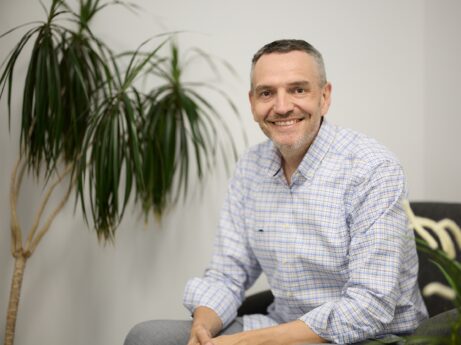
Martin Cvrkal
psychologist, psychotherapist
lead researcher, 3DME project
- A personal profile of your three motivation-to-eat dimensions
A simple explanation of what this pattern may mean for your eating behavior
Practical suggestions on which strategies and habits may be most helpful for someone with your profile
The feedback report is:
- 2–3 pages (PDF)
Prepared manually by psychologists, not by AI
Priced at $99
Completely optional – your anonymous survey data stays the same whether you request it or not
Information about this option appears only at the end of the survey and does not affect the anonymity of your answers.
- A personal profile of your three motivation-to-eat dimensions
A simple explanation of what this pattern may mean for your eating behavior
Practical suggestions on which strategies and habits may be most helpful for someone with your profile
The feedback report is:
- 2–3 pages (PDF)
Prepared manually by psychologists, not by AI
Priced at $99
Completely optional – your anonymous survey data stays the same whether you request it or not
Information about this option appears only at the end of the survey and does not affect the anonymity of your answers.
Frequently Asked Questions (FAQ)
- Is the 3DME survey really anonymous?Yes. We do not collect your full name, address or any personal identifiers. Your responses are stored under a code and are used only in aggregated form for research. Your answers will not be shared with your doctor, employer, insurance company, or any third party.
- Who can take part in this survey?Adults (18+) who are living with overweight or obesity. You can participate whether you are currently using weight-loss medication (such as Wegovy®, Zepbound®, etc.), have used it in the past, or have never used it.
- Do I have to live in the United States to participate?At this stage, we are especially interested in responses from people living in the US, because obesity care and access to medication can be very specific there. If you live elsewhere and still want to take part, you are welcome to do so – your answers will still be useful for the research.
- How long does the survey take?Most people complete the survey in about 15 minutes. You can stop at any time if you need to – your answers will be saved only after you fully submit the form.
- Will this affect my medication or medical treatment in any way?No. The survey is purely a research questionnaire. It is not a medical consultation and does not change your treatment plan. For any decisions about medication, dosing, or side effects, always talk directly to your prescribing doctor or healthcare provider.
- Do I get paid for taking part?There is no financial compensation for completing the survey. Your participation is voluntary and anonymous. However, your responses are extremely valuable to us and can help improve how obesity and eating behavior are understood in the future.
- Can I get my personal results?By default, the survey is for research purposes only and you will not automatically receive an individual profile. However, after you complete the survey, you will see an optional offer to request a personal feedback report prepared by a psychologist (2–3 pages, PDF, $99). This service is separate from the research part – if you choose it, we will ask for your email only to send you the report. Your survey data stays anonymized in the research dataset.
- Can I skip questions I don’t feel comfortable answering?Yes. You can skip any question that makes you uncomfortable. Of course, the more completely you answer, the more useful your responses are for our research – but we respect your boundaries, and you can also stop the survey at any time.
- Who is behind the 3DME project?The survey is led by psychologist and psychotherapist Martin Cvrkal, together with a small research team focused on obesity, eating behavior and motivation to eat. The 3DME project builds on many years of clinical work with people living with overweight and obesity and on ongoing scientific research in this field.
Questions about the study?
If you have any questions about the 3DME project or how your data is used, you can contact us at: